Updated: October 22, 2026
Twenty minutes you cannot repeat
Most of a wedding day can be adjusted. Portraits can run long, the cake cutting can move, a toast can be photographed twice if someone blinks. The ceremony is different. The processional happens once, the vows happen once, and the first kiss lasts about two seconds. Whatever your photographer captures in that window is what you will have for the rest of your life.
This guide is for couples planning a wedding in Miami, Coral Gables, Miami Beach or anywhere in South Florida, and it focuses on the ceremony itself: where your photographer stands, what officiants and venues allow, how the light in Miami's most common ceremony settings affects the photos, and the moments worth planning for. It also explains a few things you can do as a couple to give your photographer a better chance at every shot.
The moments a ceremony photographer plans for
Experienced wedding photographers walk into a ceremony with a mental shot list. The order varies by tradition, but most ceremonies include these moments:
- The space before guests arrive. The aisle, the chuppah, the altar, the arch or the floral installation, photographed empty and clean.
- The processional. Grandparents, parents, the wedding party, the flower girl and ring bearer, and finally the bride or partner walking in.
- The first look down the aisle. The partner waiting at the front, seeing the person they are marrying. This is often the most emotional face of the day.
- The hand-off. The moment a parent or escort hands the bride or partner over at the front.
- Readings and rituals. Unity candles, sand ceremonies, the lazo and arras in many Latin weddings, the breaking of the glass, a handfasting or a family blessing.
- Vows and rings. Close-ups of faces during the vows, hands during the ring exchange.
- The kiss and the recessional. The kiss, the turn to the guests, and the walk back down the aisle, often with petals, bubbles or cheering.
- Reactions. Parents crying, a grandmother holding a tissue, a best friend laughing during a vow.
Where the photographer stands
A photographer cannot be everywhere at once, so position is a set of planned trade-offs. The most important rule is to stay out of the guests' view and out of the aisle during the key moments.
During the processional
Most photographers stand at the front of the aisle, slightly to one side, to photograph each person walking toward them. Just before the bride or final partner enters, they often move to the side so they are not in the middle of the shot when the guests stand. A second photographer at the back captures the partner waiting at the front and the full view down the aisle.
During the vows
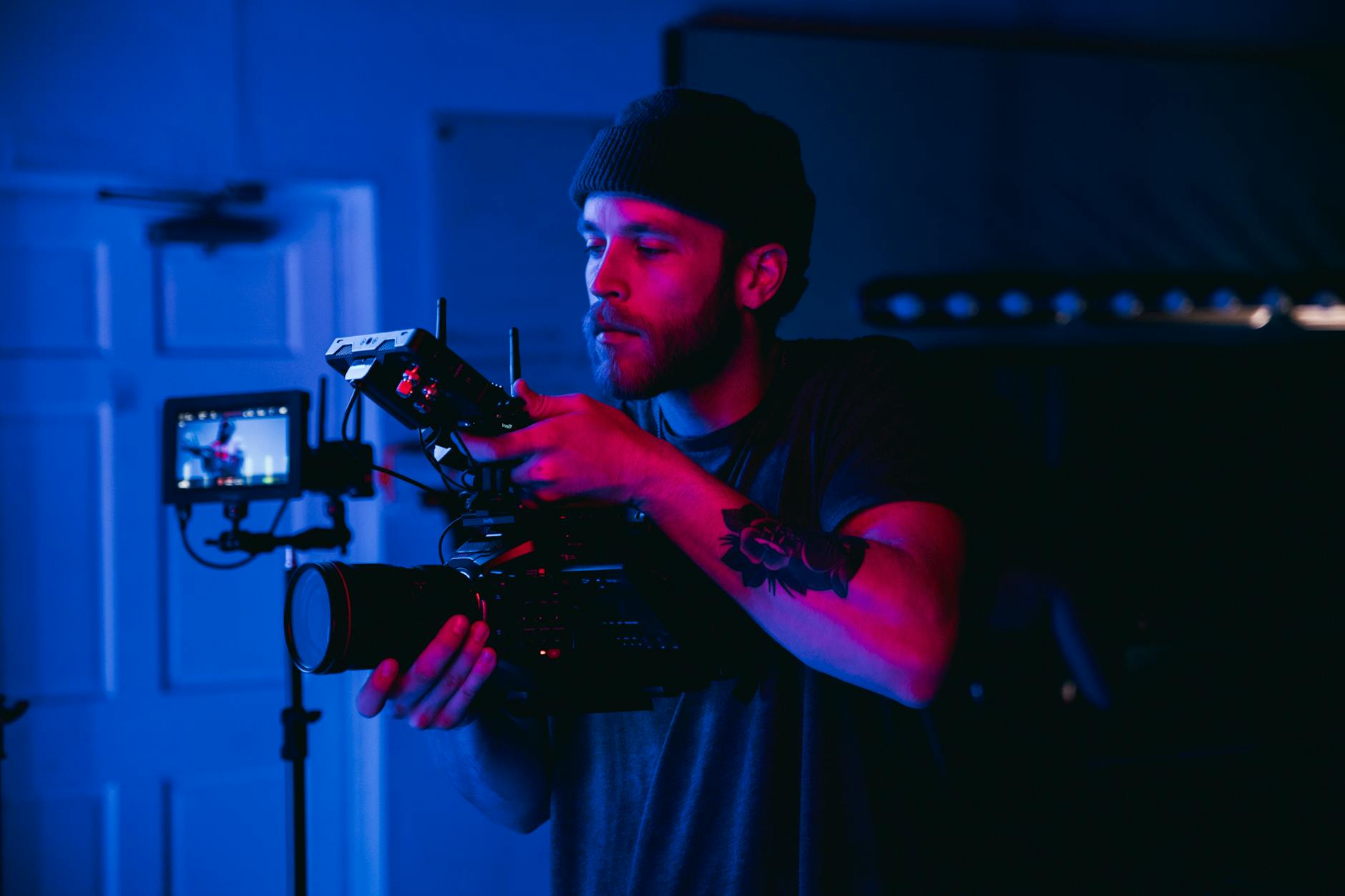
From the front, a photographer usually works from the sides of the altar or arch, with a longer lens, to catch each face without standing between the couple and the guests. Many officiants ask photographers to stay behind the last row during the vows and only move during music. A long lens, often a 70-200mm, makes that possible without losing faces.
For the kiss and recessional
The photographer moves back to the center of the aisle, a few rows from the front, for the kiss and then walks backward ahead of the couple during the recessional. It is a quick move that works best when the photographer knows exactly when the officiant will say the final words. Our guide to family group photos covers what usually happens right after the recessional.
Officiants, churches and venue rules
Every ceremony site has its own rules, and some are strict. Catholic and Orthodox churches often limit photographers to the back or the balcony during the Mass, and some forbid flash entirely. Synagogues may restrict photography on the bimah or during the ceremony itself, especially in more traditional congregations. Hotel ballrooms and beach venues are usually more flexible, but some hotels restrict where vendors can stand when other guests are nearby.
Ask your officiant and venue coordinator these questions, and pass the answers to your photographer:
- Where can the photographer stand, and are there areas that are off limits?
- Is flash allowed? Many officiants ask for no flash during the vows.
- Can the photographer move during the ceremony or only between segments?
- How long will the ceremony last, and is there a printed order of events?
- Is there a balcony, choir loft or raised area for a wide shot?
An unplugged ceremony, where guests are asked to put phones away, also makes a big difference. Many Miami couples now ask their officiant to make a short announcement before the processional, and the photos show faces instead of screens.
Miami ceremony light: beach, garden, church and ballroom
Beach ceremonies
Midday sun on the sand is harsh, creates strong shadows under the eyes and makes white dresses glow too brightly. If you can, schedule a beach ceremony within the two hours before sunset. Face the couple so the sun is behind or to the side of them, not in their eyes. Wind is the other factor on Miami Beach and Key Biscayne, so think about veils and hair.
Garden and courtyard ceremonies
Venues in Coral Gables, Coconut Grove and the Redland often have trees that create patchy light, with bright spots and deep shade across faces. A ceremony site in open shade, or one with the sun behind the trees, photographs much better. Ask your photographer to visit or look at photos from that venue at the time of day you have chosen.
Churches and ballrooms
Indoor ceremonies can be dark, and many churches do not allow flash. Fast lenses and cameras that perform well in low light are essential. Ballrooms with colored uplighting may tint skin, so ask whether the lighting company can add a soft white light on the ceremony area. Our article on reception photography in low light goes deeper into ballroom conditions.
If you are still choosing a time, our guide on the best time of day for a Miami photo session explains how the sun moves across the city through the seasons. For outdoor ceremonies in summer, the rain and heat plan is worth reading as well.
Small things couples can do for better ceremony photos
| What to do | Why it helps |
|---|---|
| Walk slowly down the aisle | Gives the photographer more frames to choose from |
| Hold the kiss for a few seconds | A quick peck is easy to miss |
| Ask the officiant to step aside for the kiss | Keeps them out of the center of the frame |
| Hold the bouquet lower | Keeps hands, waist and dress visible |
| Share the ceremony order with the photographer | No surprise rituals or readings |
| Ask guests to keep phones away | Faces instead of screens in every wide shot |
Ceremony coverage with our team
We photograph weddings across Miami-Dade and Broward, in churches, synagogues, hotels, gardens and on the beach. Before the day, we review the ceremony order with you, contact your officiant or venue coordinator about rules, and plan positions with our second photographer so the processional, the first look down the aisle and the vows are covered from both ends. During the ceremony, we work quietly with long lenses and avoid flash when it is not welcome.
The ceremony is only one part of the day. You can see how we approach the rest in our guides to getting-ready photography and our wedding photography overview. If you are planning a wedding in South Florida, tell us about your date and ceremony location, and we will send you a coverage plan built around the moments you care about most.