Updated: October 22, 2026
A small bottle, a big claim, and nowhere to hide
Skincare and cosmetics are one of the fastest-growing product categories among Miami's small brands: serums and sunscreens from local labs, Latin American beauty lines entering the US market through Miami, hair and body products, men's grooming, clean beauty start-ups selling on their own sites and on marketplaces. Every one of them sells on photographs, and skincare photography is one of the hardest product categories there is. The packaging is small and reflective, the product itself is a texture rather than an object, the colours have to be right for people choosing a shade of foundation, and the images have to carry claims of purity and quality that a single fingerprint on a bottle destroys.
This guide covers the four kinds of image a skincare or cosmetics brand needs, how each is made, the particular problems of bottles, jars, textures and swatches, and how a Miami brand can plan a session that covers a product line for a year.
The four images every product needs
- The clean pack shot. The product on white or a neutral ground, evenly lit, colour-accurate, straight on and at a three-quarter angle. This is the marketplace image, the one with the rules: white background, product filling most of the frame, no props. Our guide to e-commerce product photography covers the marketplace specifications.
- The texture shot. The cream, gel, oil or powder itself, out of the container: a swirl on a surface, a drop on glass, a smear that shows consistency. Skincare buyers want to know what the product feels like, and this is the only way a photograph can tell them.
- The swatch. For colour cosmetics, the product on skin: a stripe of foundation on a forearm, lipstick on lips, eyeshadow on a lid, across a range of skin tones. Colour accuracy here is a matter of returns, complaints and reviews.
- The lifestyle image. The product in a context: a bathroom shelf, a hand applying it, a beach bag, a Miami balcony at golden hour. This is the social and website hero image, and it is where the brand's identity lives.
Bottles, jars and tubes: the reflection problem
Skincare packaging is glass, glossy plastic, metal caps and foil labels, and all of it reflects the room, the lights and the photographer. The techniques that handle it are the same ones used for jewellery, described in our guide to jewellery and reflective product photography, applied to larger objects:
- Large, soft light sources placed so that the reflection in the bottle is a smooth gradient, not a hot spot. A strip light along one side of a bottle gives the clean vertical highlight that makes glass look expensive.
- Black cards to define edges on clear glass, white cards to fill and to hide the camera.
- Labels shot square and evenly lit so the text is legible, then the bottle lit for shape; often two frames combined.
- Gloves and lint-free cloths. Every bottle is cleaned before every frame. Dust and fingerprints that are invisible on the shelf are enormous at product scale.
- Pumps, caps and droppers positioned consistently across the line so the range photographs as a family.
Textures and swatches: getting the product right
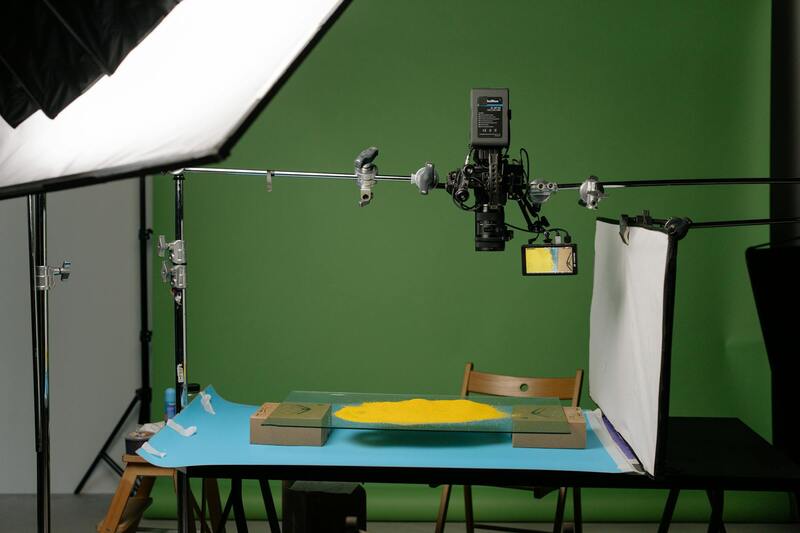
Texture shots are styled with the product itself and small tools: a spatula for a clean swirl, a syringe for a drop, a glass plate for translucency, a smooth stone or acrylic block as a surface. Lighting is raking side light to show the surface, and the shot is made quickly; creams skin over and gels flatten within minutes, faster in Miami's warm rooms. Keep the product refrigerated until the frame.
Swatches need real skin, a range of tones, and rigorous colour management: a grey card in the first frame, a calibrated monitor for editing, and the actual product beside the screen when the colour is checked. For foundation and concealer ranges, the swatch set is often the most valuable image the brand owns, because it is what a customer uses to choose a shade online. Models for swatches can be found through Miami agencies, or the brand's own team and customers, with a release.
Lifestyle images with a Miami identity
Miami is a selling point for beauty brands: sun, water, humidity, a multicultural customer base. Lifestyle sessions use it: a sunscreen on a beach towel, a hydrating serum against a tropical leaf, a hair product on a balcony with the bay behind it. Practically, these are early-morning shoots for the light and the heat, with the products kept cool in a bag and swapped in for each frame; our guide to the best time of day for a Miami session applies. Models applying product need a makeup artist who knows how the product should look on camera, and a release that covers the brand's use.
Claims, compliance and honesty
Cosmetics photography carries legal weight. Images must not misrepresent the product: retouching a swatch to a colour the product does not produce, or showing a texture that has been thickened with something else, invites complaints and regulatory attention. Before-and-after images are a particular risk and are regulated as claims. A brand's compliance advisor should review any image that implies an effect, and the photographer should keep an unretouched version of every frame. What is retouched (dust, a label flaw, a background) and what is not (colour, texture, skin in a swatch) should be agreed before the session.
Planning a session for a product line
A skincare line of ten products, each needing pack shots at two angles, a texture shot and a lifestyle image, is forty images plus swatches. A studio day covers the pack shots and textures for a line that size; lifestyle images are a separate half day on location. Bring two of every product (one to photograph, one to open for texture), the final packaging (not the sample run with the wrong label), and a list of which marketplace each image is for, since their specifications differ. Consistency matters more in this category than almost any other: the same angle, light, scale and colour across the line, and across reorders when the packaging changes. Keep the lighting notes and file them with the images; our guide to what happens after the shoot explains delivery and retouching rounds.
Skincare and cosmetics photography with Miami Event Photography
We photograph skincare, haircare and colour cosmetics for Miami brands and for Latin American lines entering the US: marketplace-compliant pack shots, texture and swatch sets with colour management and diverse models, and lifestyle images that use the city, with lighting notes kept so the next product matches the last. Retouching follows an agreed rule set, and unretouched frames are kept for compliance. If you have a line launching and packaging in hand, send us the product list and we will plan the studio and location days. More about our product work is on the about page, and the rest of our guides are on the blog.